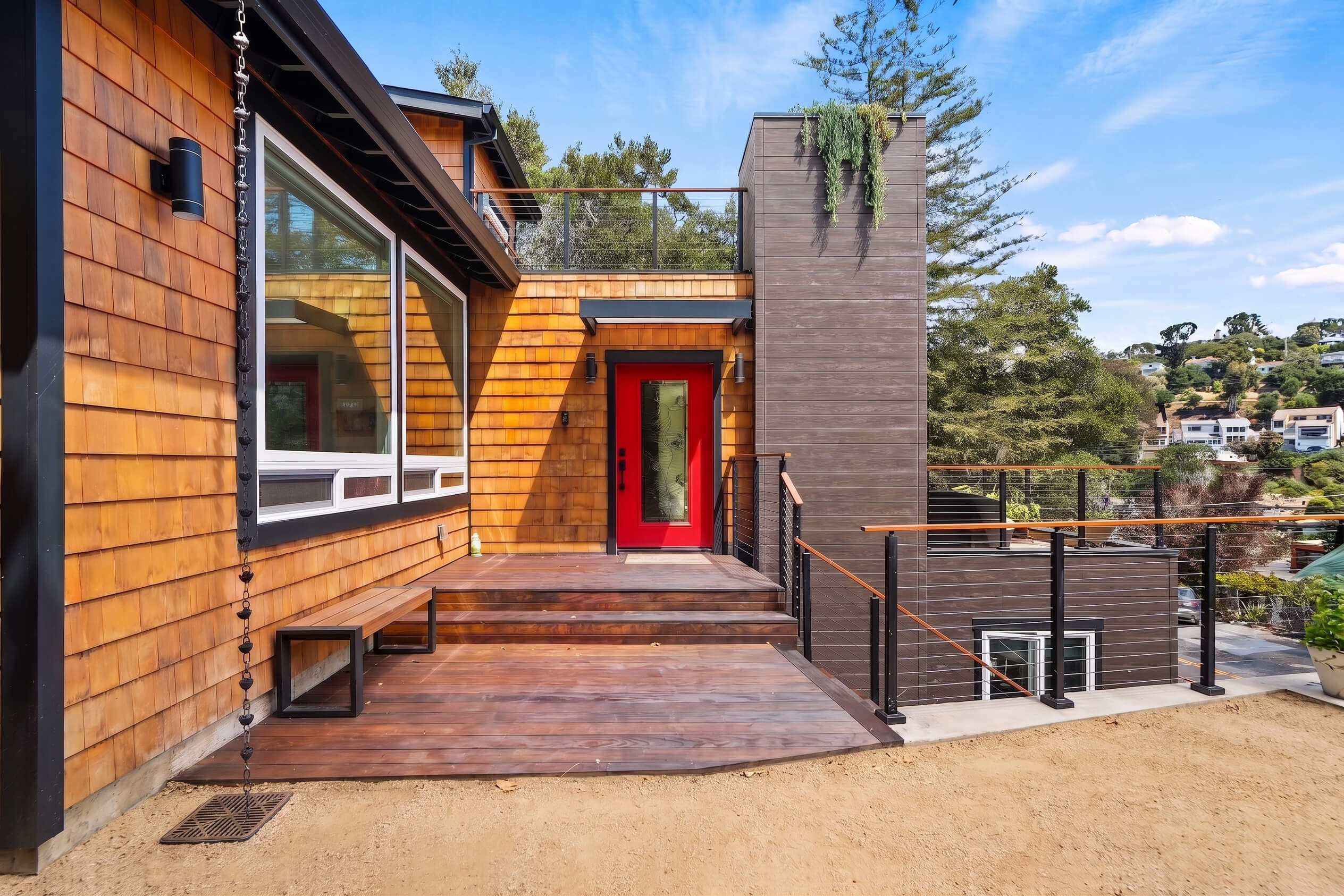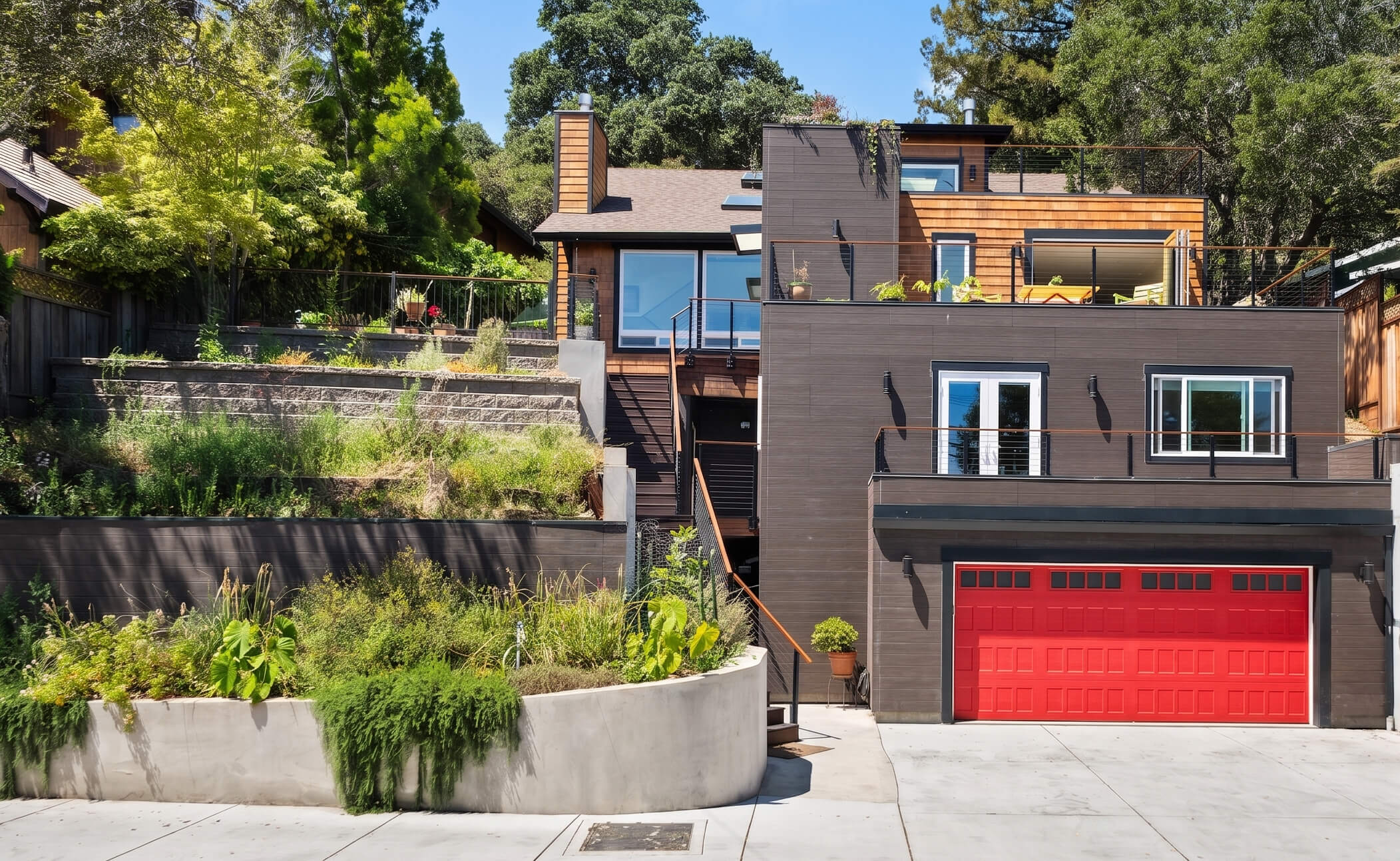
Homeowners sometimes imagine that the early stages of design are mainly about sketches, layouts, or style. In reality, feasibility and concept design are where some of the most important decisions about a project begin to take shape. This is the phase where goals are tested against the realities of the existing house, the site, the budget, and the way the family actually lives.
Sometimes that process confirms the original idea. Just as often, it reveals a better one.
This early phase is less about arriving at a finished design and more about understanding what kind of project actually makes sense. It is where an architect begins to translate goals into possibilities, while also testing those possibilities against real constraints and opportunities. For homeowners, that can be one of the most valuable parts of the process, because it helps bring clarity before too much time, money, or expectation is attached to the wrong approach.
What This Early Phase Is Really For
At this stage, the questions are often broader than people expect. Is the project feasible as imagined? Is the most obvious move really the best one? What will the site support? Which priorities can be addressed together, and which may need to be phased? What tradeoffs come with one direction versus another?
These are not final-design questions. But they are often the questions that determine whether a project moves forward in a thoughtful and realistic way.
A Real Example: Testing More Than One Direction
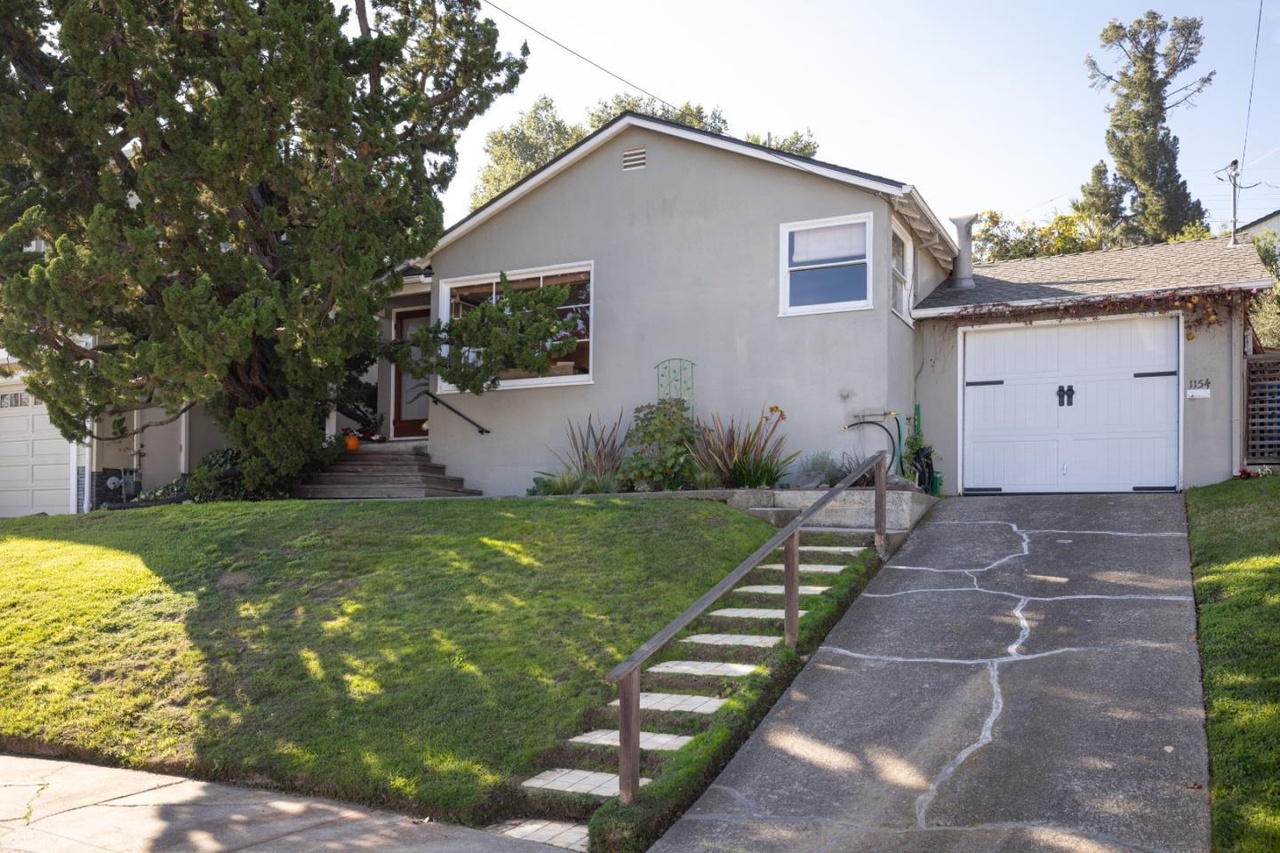
One project that comes to mind involved a small, older house with several overlapping needs. The family wanted to add a primary suite, improve the connection between the living spaces and the yard, and refresh the kitchen and bathrooms. They also wanted to address the sloping site at the front of the house and explore whether a more accessible route could be created for aging in place. The existing home was a single-level three-bedroom, one-and-a-half-bath layout, with limited storage in the primary bedroom and a steep driveway that was still about 20 percent even with the garage already five steps below the main level.
On the surface, it might sound like a fairly straightforward addition. In reality, it raised a series of interrelated questions that are typical of early feasibility work. Should the new suite be added at the rear, where it could open more directly to the garden? Or at the front, where a larger intervention could also improve access by lowering the garage and reducing the driveway slope? Should the project focus on the most immediate spatial needs, or try to address accessibility and parking more comprehensively at the same time?
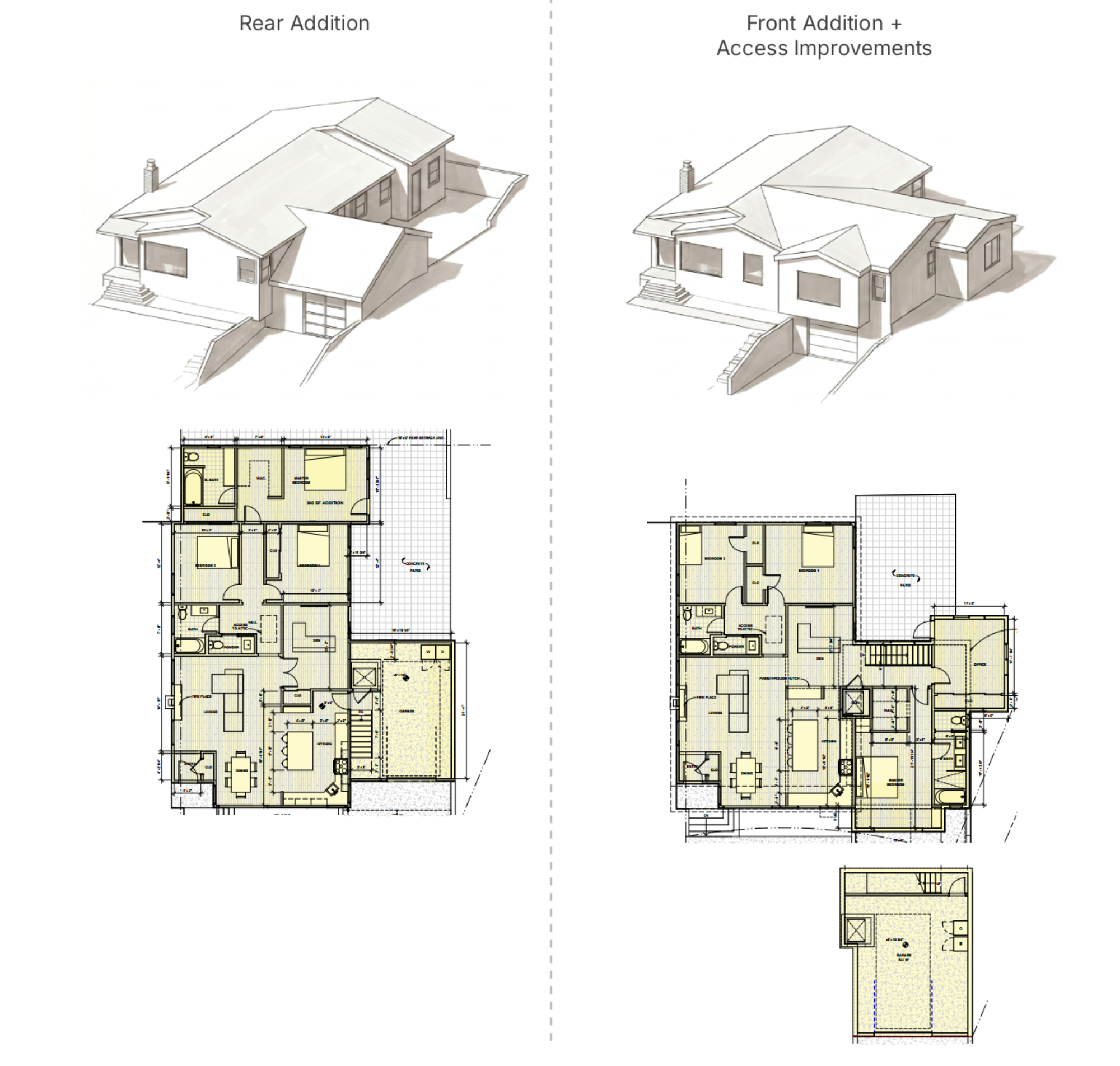
During concept design, we studied both directions. One option pursued a more modest rear addition with improved flow to the yard and a meaningful, though limited, improvement to access. The other explored a more ambitious front addition tied to a much greater reworking of the garage and front approach. What mattered was not simply generating alternatives, but understanding what each path would accomplish, what it would leave unresolved, and what it would demand in return. In the end, the work really came down to balancing two main goals: improving accessibility at the steep front approach, and creating a new primary suite with better flow through the house and out to the garden.
Making the Tradeoffs Visible
That is one of the main reasons feasibility and concept design matter. A family may come in with a wish list that is entirely reasonable, but once those goals begin interacting with the realities of the site and the existing house, the project usually becomes more nuanced. Solving one problem may create another. A more comprehensive option may address more concerns, but exceed the budget. A simpler option may not solve everything, but may still be the right decision.
In this case, that early phase helped make the tradeoffs visible. The rear-addition option improved the primary suite and the relationship between the main living areas and the yard, while making a meaningful but more modest improvement to accessibility. The front-addition options addressed accessibility more fully, but required a larger intervention. At the end of the process, the clients chose the rear-addition approach because it aligned more comfortably with their budget.
That is feasibility and concept design at its best. It is not just about generating ideas. It is about testing them against real conditions early enough that the project can move in the right direction.
What Feasibility and Concept Design Actually Help Clarify
In practice, this phase often includes a mix of listening, analysis, and exploration. It may involve reviewing zoning and site constraints, understanding how the existing house works, identifying pressure points in the layout, and studying multiple ways the project could be organized. Sometimes the result is a clearer version of what the client already had in mind. Sometimes it is a reframing of the project altogether.
It is also the phase where priorities start to separate from wishes. Not because wishes are unimportant, but because they rarely all carry the same weight. One of the most valuable things this stage can do is help a homeowner understand which moves will have the greatest impact on daily life, and which are better deferred, simplified, or reconsidered.
Why This Stage Matters So Much
For some homeowners, feasibility and concept design can feel like an optional preliminary step. In my experience, it is often where the foundation of the project is really set. Not in the sense of finalizing every detail, but in the sense of asking the right questions early enough for the answers to still shape the outcome.
A good early phase does not simply move quickly toward drawings. It helps ensure that the project being drawn is the right one.
If you are considering a remodel, addition, or larger rethinking of your home and want to understand the possibilities before too much is set in motion, feel free to get in touch.